
%2520(2000%2520x%2520500%2520px).png&w=640&q=75&dpl=dpl_GdCiQRgjVG7ToBPEowEH5rf8MpVn)
Faster Shortlists, Better Decisions: AI for Bloodstock Agents at Sale Time
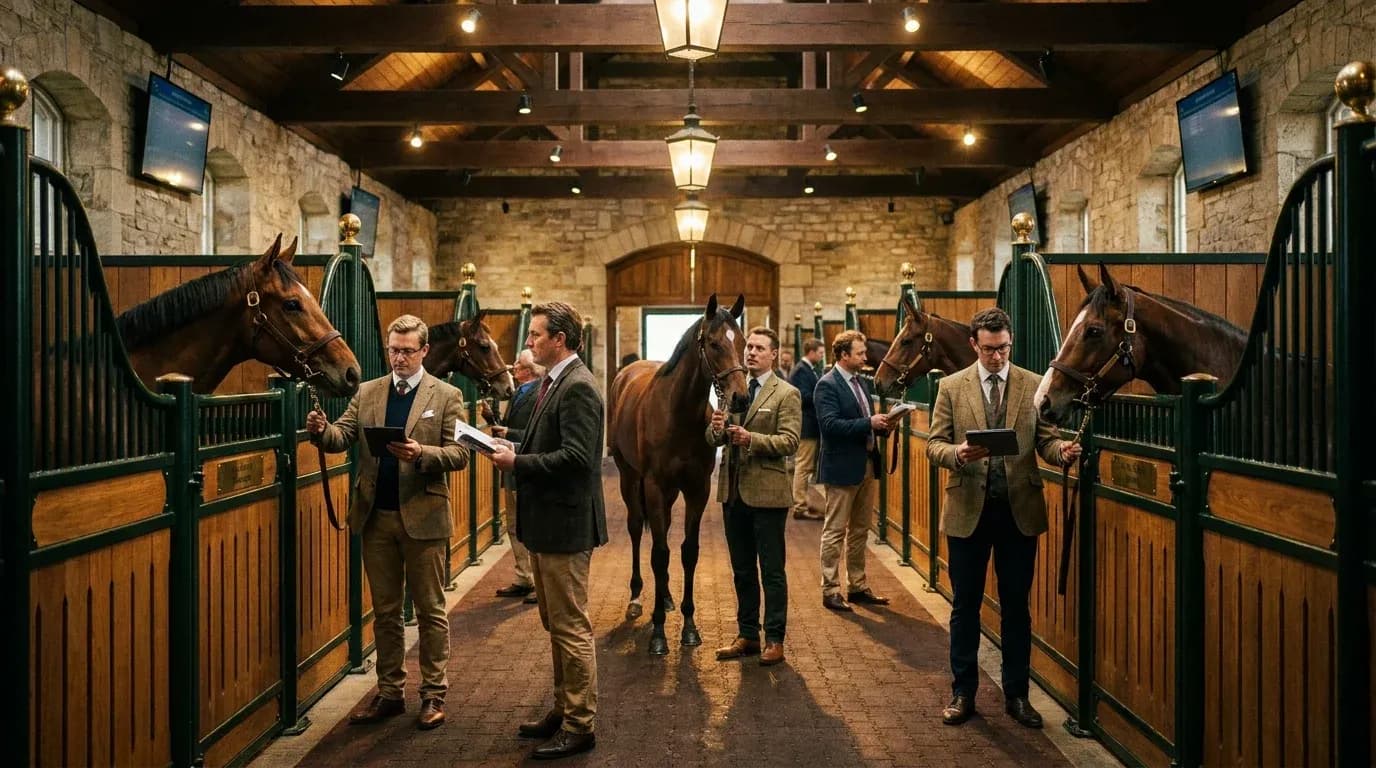
At a serious yearling or breeding stock sale, time disappears quickly.
A catalogue can run from a few hundred lots to well over 800, and major sales can push past 1,000. Inglis Premier listed 806 lots in 2025, Inglis Classic listed 803, and the Gold Coast Yearling Sale has long been one of the biggest and most competitive inspections on the calendar. Before sale day, agents and buyers are already building spreadsheets, marking catalogues, reviewing pedigrees, checking produce records, and trying to narrow a very large pool into a workable shortlist.
Then the real pressure starts.
Even with strong preparation, some decisions still have to be made in 10 to 20 minutes, sometimes less. A horse moves on your list after an inspection, a vet note changes the picture, a parade raises a question, or a competing buyer forces a quick call on value. That is exactly where better decision support matters.
AI is not a replacement for a top bloodstock agent. It is a way to get to the right horses faster, with more context in front of you, while there is still time to act.
Why sale-time analysis is still so hard
The challenge is not a lack of information. It is too much information, spread across too many places.
For one lot, a buyer might want to review:
- the pedigree page
- the dam's produce record
- siblings and close family performance
- sire and broodmare sire patterns
- sale history and comparable results
- private spreadsheet rankings
- inspection notes
- parade video or photos
- trainer, environment, or developmental context
- Pose inspection for conformation
Now multiply that by 400, 800, or 1,200 lots.

That is why even excellent agents rely on a process. They pre-build lists, rank horses, work through family notes, and keep private comments in spreadsheets or notebooks. The best buyers are not just better judges of a horse. They are usually better at filtering complexity. It is somewhat of a skill, and there is no correct way of doing it.
What AI can actually help
The useful application of AI at sale time is practical, not theoretical.
It can help teams:
- analyse catalogue and spreadsheet data faster
- summarise pedigrees and family performance in plain English
- compare lots against custom criteria
- surface patterns that are easy to miss manually
- highlight possible value horses or long shots
- centralise notes, stats, media, and rankings in one place
- turn a large catalogue into a smaller, more actionable working list based on key data points
- In a more sophisticated system it can even learn patterns in your own preferences over time
That matters because speed matters here, but it is a complex process. Rushed speed misses things. Informed speed helps maintain quality.

When a shortlist is tighter and better organised, an agent can spend more of their energy where human judgment matters most: looking at the horse, assessing movement, weighing risk, and deciding whether the market is about to underprice or overprice a lot.
Pedigree matters, but pedigree alone is not enough
Pedigree analysis remains central to bloodstock work. It should remain central.
But pedigree alone has never been enough to reliably predict a runner, let alone a black type horse.
That point is becoming even clearer as genomic research improves. In a 2025 Scientific Reports study on 185 North American Thoroughbreds, researchers noted that genomic tools allow a more accurate assessment of diversity and inbreeding than pedigree alone. The University of Kentucky's summary of the work made the practical point clearly: genomic tools can help breeders monitor risk and make better-informed decisions, but they are unlikely to replace breeder insight and intuition.
That is the right framing for sale-time AI as well.
The best decisions still combine multiple inputs:
- pedigree and page strength
- physical type and pose
- parade and movement analysis
- veterinary and soundness context
- DNA or genomic data where relevant
- training and environmental fit
- buyer objectives and budget
- human judgment, instinct, and experience
AI can help organise and interpret pieces of that puzzle. It cannot stand in the ring and feel what a great agent feels when a horse walks out and everything lines up.

The real edge is process plus instinct
Top bloodstock agents often outperform average buyers for a simple reason: they combine disciplined process with instinct honed over years.
They know what they are looking for. They know what they will forgive. They know when a page is fashionable but vulnerable, and when an unfashionable lot deserves another look.
AI can strengthen that edge.
Instead of replacing experience, it can make an experienced process sharper:
- ranking similar profiles across an entire catalogue
- pulling family updates faster
- comparing lots against the buyer's own historical preferences
- flagging patterns between sire lines, female families, and performance outcomes
- showing where a horse matches the sort of profile an agent has previously bought well
That last point is especially interesting.
Over time, a well-built system can learn from an agent's historical selections and outcomes. Not to make the final decision for them, but to surface horses with similar traits, family patterns, price ranges, or performance indicators. That can be valuable both at the top end of the market and in the search for overlooked horses that fit a buyer's style better than the public market realises.

Better shortlists create better sale-day decisions
The practical benefit is not that AI tells you which horse to buy.
The benefit is that it helps you arrive at the sale with a cleaner, more defensible shortlist, then adjust faster when new information comes in.
For bloodstock agents, pinhookers, breeders, syndicators, and serious buyers, that can mean:
- fewer obvious horses slipping through the cracks
- faster reactions when inspections change the order of preference
- more confidence in comparing similar lots
- better use of team notes and private knowledge
- more time spent judging horses, less time chasing fragmented information
That is decision support. And in bloodstock, decision support has real value.
Where Thoroughbreds.ai fits
At Thoroughbreds.ai, we see AI as a decision-support layer for serious buyers, not a decision replacement engine.
That means helping bloodstock professionals move faster through complexity, without pretending data can replace the eye, the feel, or the lived pattern recognition of an experienced horseman or horsewoman.
If you have read our earlier pieces on thoroughbred pedigree analysis with machine learning and why bloodstock needs better data, this is the next step in the same idea: using better systems to support better judgment.
It also sits naturally alongside the longer-term opportunity in equine DNA and genomic insight, especially as more buyers and breeders look for ways to combine pedigree, phenotype, and genetics into one clearer picture.
The agents who will benefit most from AI are not the ones looking to automate and systematise the craft.
They are the ones who already have a process, already trust their judgment, and want a faster way to get the right horses in front of them. We are aiming to help with that and would love to help you.
If that sounds like your workflow, you can sign up from the 1st of may.
Sources
- Inglis Sales Results
- Gold Coast Yearling Sale inspection guide, Magic Millions
- University of Kentucky, 'DNA doesn't lie': New genetic study illuminates genetic diversity in North American Thoroughbreds
- Scientific Reports, Analyses of whole-genome sequences from 185 North American Thoroughbred horses, spanning 5 generations
Roger Chappel
CTO
Roger Chappel is our CTO — part engineer, part data nerd, part horse obsessive. When he's not wrangling machine learning models, he's probably knee-deep in pedigree data trying to figure out what makes a champion tick. His mission? Make the thoroughbred industry a whole lot smarter, one algorithm at a time.
Ready to Get Started?
Join thoroughbred professionals using cutting edge equine analysis for breeding, sales, and racing decisions.
FREE SIGN UPReady to make better breeding decisions?
Join industry professionals using data-driven insights for thoroughbred breeding, sales, and racing analysis.
FREE SIGN UP